 Russia
 Belarus
 Georgia
 Kazakhstan
 Kyrgyzstan
 Uzbekistan
 China
China Nepal
Nepal Bangladesh
 Poland
 Romania
 Slovakia
 Hungary
 N. Macedonia
 Vietnam
 Canada
 Armenia
 UK
UK Australia
 USA
USA Ireland
 Germany
 New Zealand
 Italy
Italy France
 Singapore
 Netherlands
 Sweden
 Switzerland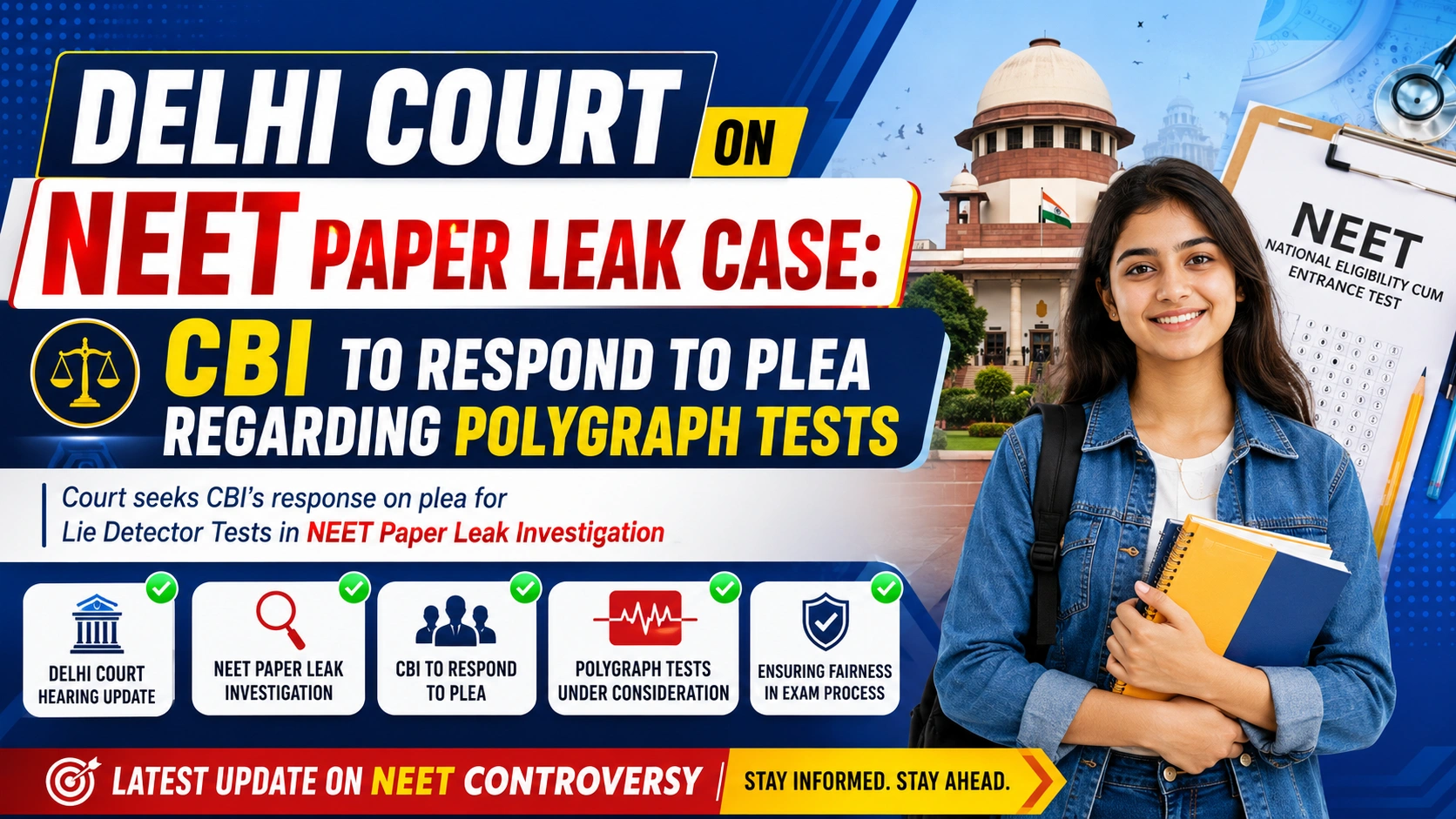
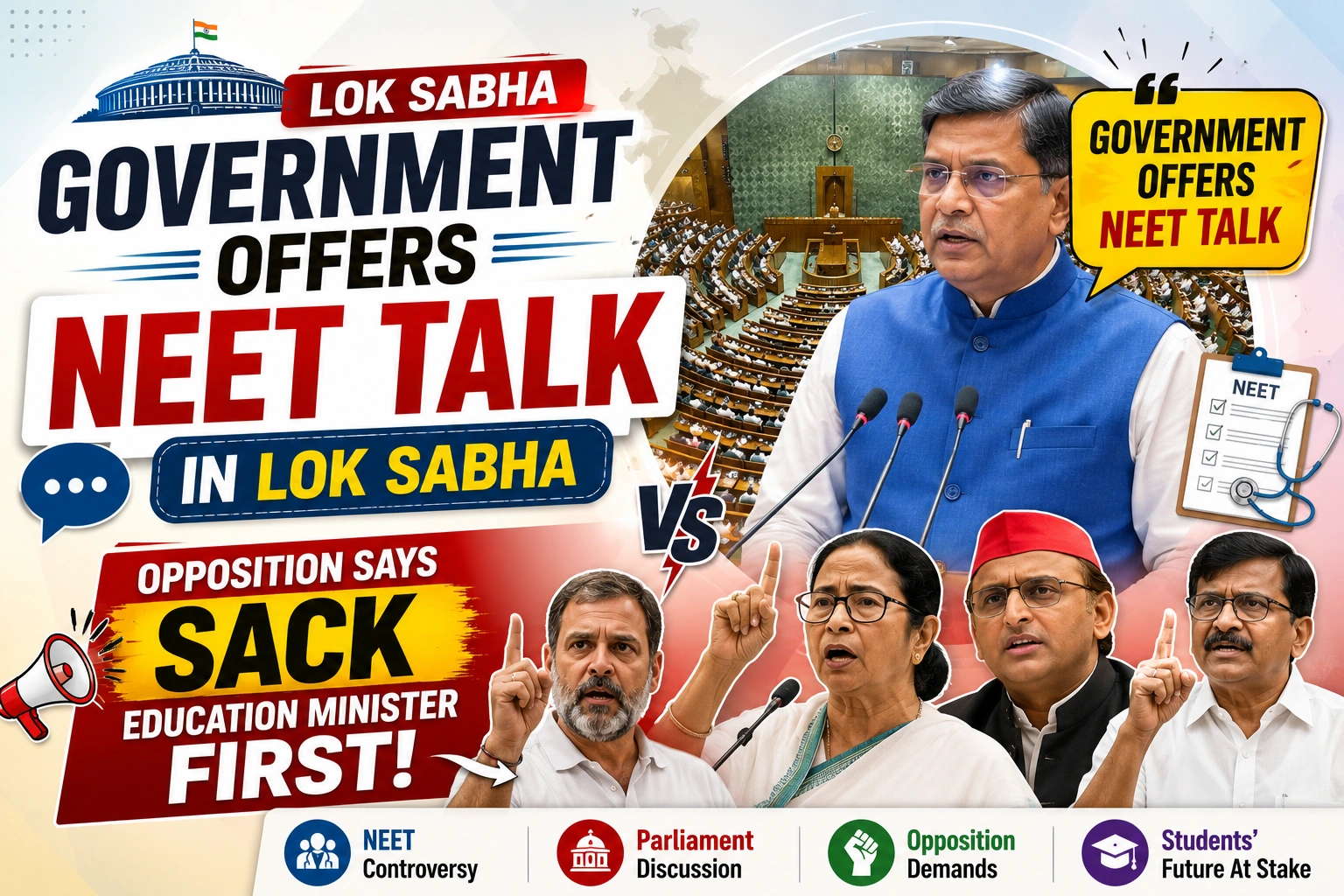
The Delhi court has directed the CBI to respond to a petition from the three accused persons wherein they have sought permission to undergo polygraph tests and brain-mapping examinations. The controversy surrounding the leak of the NEET paper has again gained traction. The CBI is conducting an inquiry regarding the alleged leak of the NEET-UG 2026 paper, regarding the exam material, how it was accessed, circulated, and utilized before the conduct of the examination. The focus has shifted to the scientific methods and how far they are efficient in exposing the real offenders when the evidence is weak.
The accused persons have stated that they are ready to undergo the said examinations, and the proceedings have attracted a lot of attention. If the examinations reveal any new evidence, then the proceedings will significantly assist the investigating agency in bringing closure to the examination leak case.
The NEET leak controversy concerns thousands of students who prepared religiously for months because, allegedly, the leak compromises the fair and equal opportunity to all examinees. This case also concerns parents because the integrity of the examination process defines the success of the medical aspirants.
What Has Happened in the NEET Paper Leak Case?
The Central Bureau of Investigation (CBI) is probing the case after some individuals claim that the exam material was available to them before the exams. The CBI is interested in the suspected leak and the examination material, the alleged network, and the persons who might have been the leak suspects.
The Delhi court is working on a petition filed by three accused persons. They want to take a polygraph and brain-mapping tests. The court wanted to know the stand of the CBI before making any orders.
The court also reserved its order on the plea. This means the request should not be construed as an opinion on the guilt or innocence of any accused.
An important aspect in this case is that the exam material should be proven. This can be done through eyewitness, forensic, digital records and legal methods. A polygraph test is requested in the case by one of the accused. /
Why Does This Investigation Need a Polygraph Test?
A polygraph exam determines changes in physiological response as someone answers various questions. Investigators consider the responses, but a polygraph exam is not equivalent to a scientific machine that determines if someone is speaking the truth.
Considering that investigators may already have access to call records, digital messages, financial transactions, CCTV recordings, electronic devices, location data, documents, and witness testimonies, in an examination leak investigation, polygraph exams (where it is legally applicable) can be used along with those evidences and not in the place of those evidences.
The submission is also relevant because the accused claimed that they were in favor of taking the polygraph tests. Consent will play a big role in the application of polygraphs and the Brain Electrical Activation Profile tests in Indian constitutional law.
According to the Supreme Court, What Does the Legal System Think of Polygraph Tests?
The relevant legal system cannot be explained without the Selvi case of the Supreme Court. The Supreme Court, in its decision of 2010, stated the constitutional issues that arose because of the administration of narco analysis, polygraph tests, and Brain Electrical Activation Profile (BEAP) tests without the person’s consent. The Supreme Court argued that the administration of these tests without consent of the person is a violation of Article 20(3) and 21 of the Constitution.
While these safeguards had been recognized in the case law, the Court seemed to accept that a legal framework for voluntary administration was required. Consent must be genuine and informed, and the person should be aware of the likely physical, emotional and legal impacts of the process. Further, the Court was concerned with the procedural safeguards, including the right to legal representation and the necessity of obtaining consent in the presence of a judicial magistrate.
Another related issue discussed in the case law is that the results of such tests cannot be regarded as simple confessional evidence merely because a person has agreed to take the tests. However, evidence obtained as a consequence of voluntary administration of tests may be considered in another suitable legal context.
Even if the Delhi High Court allows the tests to be carried out, the results of such tests would have to be evaluated in the context of the legal and evidentiary framework existing at that time.
What’s Next for the CBI?
The first thing to happen is that the CBI has been directed to file a response to the application. The application may be addressed on whether it is legally tenable and whether such tests are necessary. The legal safeguards may also be considered.
It is likely that the CBI will have to carry out numerous other scientific examinations along with the proposed tests. In paper leak cases, the examinations carried out may need to be evaluated in the context of establishing how examination material was accessed and what was done with that, who received it and how it was transmitted, and if it affected the candidates and the examination centers.
Digital evidence can become particularly valuable. Mobile phones, messaging apps, payment records, call details, electronic files, CCTV recordings, and even location data, can help an investigation get a better sense of the order of the various events.
This broader evidence is important because a polygraph test does not, on its own, provide evidence to support a paper leak, nor does it identify all participants in the alleged examination racket.
What’s the Impact of the NEET Paper Leak on Students?
The primary impact of a suspected leak on medical aspirants is the undermining of faith in judicial systems. NEET is India’s primary medical entrance examination, and its results govern a candidate’s right to pursue a medical degree in government or private institutions.
Students make considerable investments of both time and money in preparations. Many students utilize coaching classes, mock tests, revisions, and several other intensive practice methods prior to appearing for the examination. If the examination materials are leaked to certain candidates, students become disillusioned with the examination process.
The credibility of an entrance examination rests on faith that all candidates are examined under substantially the same conditions.
Students should follow events and updates surrounding NEET and become more informed regarding admission and other relevant procedures through MBBS Advisor.
NEET Rank and Medical Admissions: The Relevance of Exam Integrity
With the NEET examination, the marks scored and the resulting rank are critical for determining the medical admissions that are open to the candidate. Rank is one of the determining factors for selection in government colleges, private colleges, deemed universities, and other admissions.
The NEET Rank Predictor can help students understand their potential ranking for planning purposes. Rank predictors should not be construed as official results, as ranking is determined by the official exam results, the performance of the candidate, tie-break rules, and other pertinent rules and factors.
The paper leak incident demonstrates the necessity of reliable and transparent exam systems. Even mild disruption can cause a huge amount of concern for a large number of candidates.
The NEET Scanner (controversy) also pertains to students desirous of studying medicine outside India. Indian students desirous of studying MBBS Abroad will have to meet all the criteria that Indian citizens studying medicine abroad will have to comply with.
NEET qualification is important for Indian students who intend to undertake medical education abroad and wish to practice in India. However, qualifying NEET will not mean that all medical universities outside India will satisfy the requirements.
Students must ascertain, on their own, the university, the duration of the medical course, the availability of clinical training and internship, the regulatory framework, and then take admission. They should refer to the latest rules of the National Medical Commission (NMC) and not depend on information provided by agents or other sources.
Students seeking information on medical institutions are advised to verify their information through the World Directory of Medical Schools (WDOMS) and check the latest requirements pertaining to Indian students.
The importance of WHO, NMC and WDOMS verification
When medical universities abroad are compared, phrases like “WHO approved”, “NMC approved” or “internationally recognized” are found. These statements require examination because recognition, as well as eligibility, may involve different regulatory procedures.
For Indian students, the NMC's regulations and eligibility criteria should remain an important reference. WDOMS can also be used to check whether a medical school is listed. However, such a listing should not be considered as absolute authorization to practice medicine in India.
This is pertinent for students aspiring for MBBS Abroad, as practicing medicine in India after studying in a University with low fees, offered as an advertisement, may bring difficulties later on.
Could the Polygraph Test Change the NEET Investigation?
Regarding the court’s decision on the polygraph issue, while this may potentially be an important development, this should not be the only focus on the investigation.
If the tests are permitted as per the legal safeguards, this may give the investigators more opportunities to carry out the investigation. However, the strength of the case will depend on the other legally admissible evidence.
Selvi makes it abundantly clear the Supreme Court is not in favor of bypassing constitutional protections because of the need for efficiency in investigations. However, techniques that are voluntarily administered in a scientific manner can have a small role to play in investigations as long as the required safeguards are in place.
Where this leaves us is in acknowledging that the courts have a tough job of balancing these two competing demands.
What Should NEET Aspirants Do Now?
NEET aspirants have to be extremely careful not to base their understanding of what may or may not be happening on the, often unverified, posts on social media. As stated many times, investigations are long and complicated and things said in the media often oversimplify the circumstances. One has to be able to distinguish between allegations, queries, court orders and final judgements.
Until official communication is available, aspirants must check and review official communication in relation to the announcement of the NEET exam. There has to be diligence in reviewing all official advisories related to NEET registration, counselling, and other related procedures.
Also, students applying for MBBS, both in India and abroad, are advised to ensure that all the supporting documents are readily available, including a copy of NEET scores, degrees, ID's, and other related documents, etc.
For students looking for alternatives to studying MBBS after NEET, as a resource for gaining more information,MBBS Advisor may be used to understand the various paths available and related topics to medical school admissions.
The Larger Issue: Restoring Trust in Competitive Examinations
The investigation into alleged NEET paper leaks goes way beyond the individual persons alleged to be involved. This incident also speaks to the larger issue of confidence in the integrity of high stake examinations.
A good system for conducting examinations must have secured distribution of question papers, access control, dependable systems of transport and storage, systematic monitoring, cyber protection, dedicated staff, and rapid investigation when a violation is reported. Accountability in dealing with examinations is critical because students have to have confidence that a violation will be thoroughly investigated and the prescribed punishment will be inflicted on the guilty person.
The recent developments of law also show that the integrity of examinations is gaining greater importance. A Public Interest Litigation filed before the Supreme Court in 2026 demanded the creation of a uniform system of investigation and a time bound procedure of investigation and a stronger regime against the organized crime of paper leak.
The goal should be the prevention of examination fraud rather than the investigations which are initiated after the students have suffered.
Conclusion
The instruction to the CBI for a response to the petition of the three accused who have demanded polygraph and brain mapping tests in the continuing NEET paper leak case is another important step in the investigation. The outcome of the case will determine, within the boundaries of law, if the examinations can be carried out.
The lesson for NEET aspirants is the importance of having trust in the system. An equitable and just medical entrance examination is an important requirement given the significant impact that the outcome of the NEET examination has on the careers of aspiring young doctors in the country.
At this stage, it is also important to know that an ongoing investigation should not be interpreted as a determination of guilt. The central bureau of investigation collects evidence and looks into the matter. The court will decide the legal questions and stipulate guilt (if any) based on the evidence and the laws.
For students in the pre-medical field, paying attention to responsible news outlets is more important than responding to unverified social media posts. In the event that a student seeks to join an Indian medical college or if a student considers an MBBS abroad, careful review of eligibility and recognition, rules and regulations guiding admissions, and other relevant matters is critical.