 Russia
 Belarus
 Georgia
 Kazakhstan
 Kyrgyzstan
 Uzbekistan
 China
China Nepal
Nepal Bangladesh
 Poland
 Romania
 Slovakia
 Hungary
 N. Macedonia
 Vietnam
 Canada
 Armenia
 UK
UK Australia
 USA
USA Ireland
 Germany
 New Zealand
 Italy
Italy France
 Singapore
 Netherlands
 Sweden
 Switzerland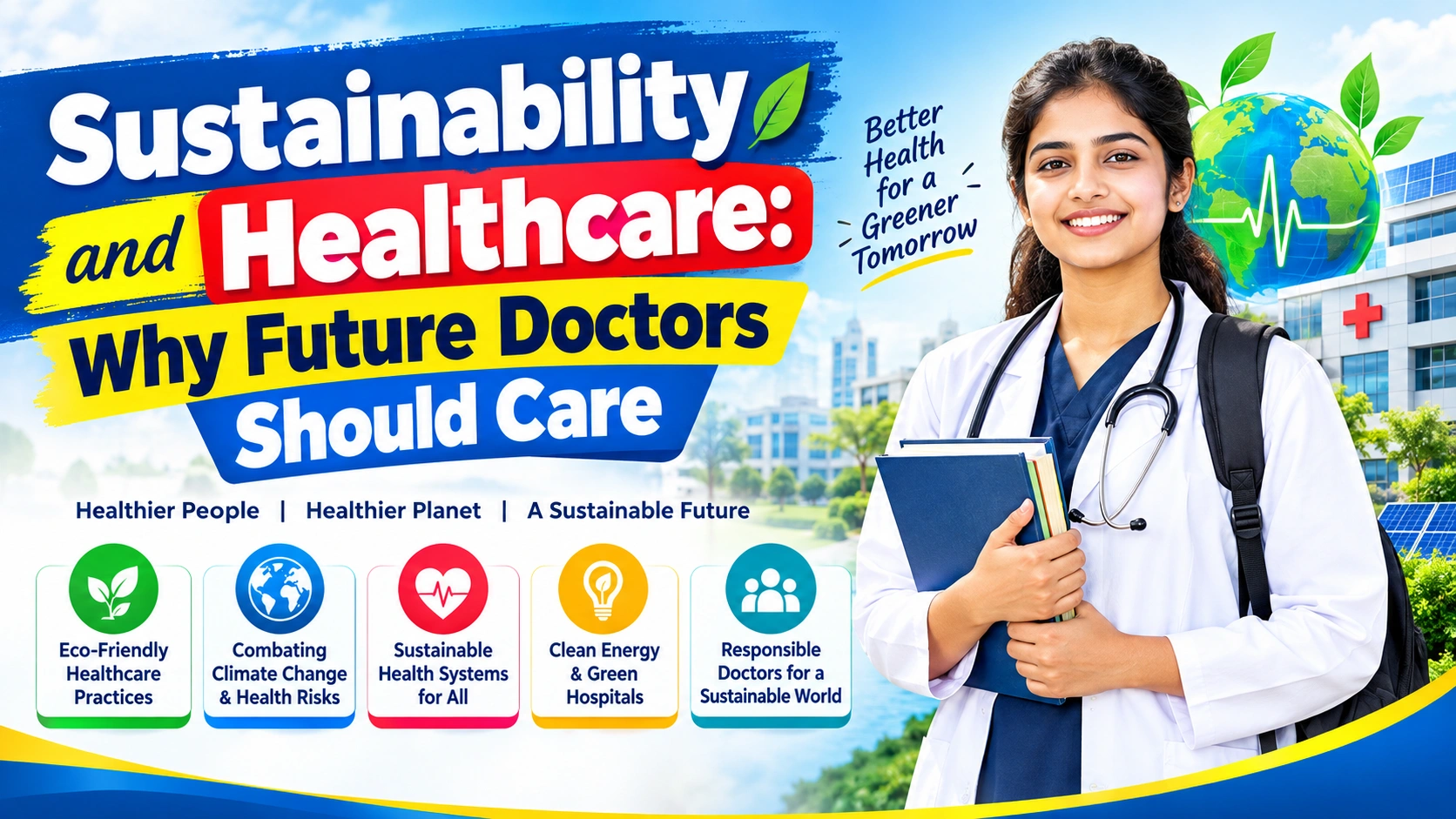
A doctor throws away a used syringe, opens a fresh pair of gloves, orders a diagnostic scan and prescribes medicine. Each decision looks small. Routine, even. But behind it sits a long chain involving plastic, electricity, water, transport, manufacturing and waste disposal. Healthcare saves lives. It also consumes a serious amount of energy and produces large volumes of waste. According to the World Health Organization, the health sector contributes roughly 5% of global greenhouse-gas emissions. That is not a minor side issue. It means the system created to protect human health can, without careful planning, contribute to air pollution, climate-related illness and resource shortages. Future doctors will work right in the middle of this contradiction. For medical aspirants researching courses through MBBS Advisor, sustainability may sound less urgent than NEET scores, university fees or clinical training. Fair enough. Admissions come first. Still, medical education isn’t only about getting a seat and clearing examinations. It is preparation for decades of clinical decisions, many of which will affect patients as well as the environment around them. Honestly, this subject doesn’t receive enough attention.
What Does Sustainability in Healthcare Actually Mean?
Sustainable healthcare means delivering safe, effective and affordable medical care while using energy, water, medicines and materials responsibly. It also means preparing hospitals and public-health systems for heatwaves, floods, changing disease patterns and other environmental pressures. This isn’t about refusing necessary treatment to save electricity. Not at all. Patient safety remains the first priority.The practical goal is simpler: avoid waste that offers no medical benefit, choose safer alternatives where possible and build health facilities that can continue working during environmental emergencies. A sustainable hospital may use energy-efficient equipment, manage biomedical waste correctly, reduce unnecessary testing and maintain backup systems for extreme weather.
A few examples make the idea clearer:
- Prescribing antibiotics only when clinically justified
- Separating infectious waste from ordinary waste
- Preventing avoidable medicine expiry
- Using teleconsultation for suitable follow-up cases
- Reducing unnecessary laboratory and imaging tests
- Choosing reusable equipment where infection-control standards permit
- Conserving water without compromising hygiene
- Purchasing medicines and devices from responsible suppliers
Small choices. Large combined effect.
Climate Change Is Already a Clinical Issue
Can doctors treat climate change? Not in the usual sense. They can, however, treat the health problems it creates—and those problems are already reaching clinics.Longer heatwaves can lead to dehydration, heat exhaustion, heatstroke and worsening kidney or cardiovascular conditions. Poor air quality aggravates asthma and chronic obstructive pulmonary disease. Flooding may contaminate drinking water, interrupt vaccination services and increase the risk of diarrhoeal illness. Changes in temperature and rainfall can also influence the distribution of mosquitoes and other disease vectors.
This puts future doctors in a new position. They won’t only ask, “What disease does this patient have?” In many cases, they may also need to ask what environmental exposure contributed to it, whether other people in the area face the same risk and how the health facility will respond if cases suddenly rise.The WHO framework for climate-resilient and low-carbon health systems connects sustainability with workforce readiness, infrastructure, supply chains, emergency planning and disease surveillance. So the issue reaches far beyond switching off unused lights. It affects how an entire health system functions under pressure.
Hospitals Have a Bigger Environmental Footprint Than Most Students Realise
Walk through a busy hospital for one hour and watch what gets used. Gloves. Masks. Syringes. IV tubing. Packaging. Cotton. Cleaning chemicals. Medicines. Oxygen. Electricity. Water. Much of it is essential, but some of it is wasted because of weak planning or careless habits. That adds up fast. Operating theatres and intensive care units need uninterrupted power, controlled ventilation and a continuous supply of sterile products. Diagnostic equipment consumes electricity. Hospitals run kitchens, laundries, laboratories, pharmacies and transport services. Medicines and devices travel through long supply chains before reaching the patient.
Waste is another concern. If infectious material, recyclable packaging, food waste and general rubbish are mixed together, the entire load may require expensive hazardous-waste treatment. Correct segregation at the point of disposal makes a real difference. One properly labelled bin can matter more than a glossy environmental campaign nobody follows. Students exploring medical education through MBBS Advisor should look beyond lecture halls and campus photographs. A teaching hospital’s waste-management system, water reliability, infection-control practices and emergency preparedness also reveal something about the quality of training.
Why Medical Students Need Sustainability Skills
The habits formed during medical college often continue into professional practice. If students learn that ordering every available investigation is “safer,” they may carry that behaviour into residency. If they learn to connect each test with a clinical question, they are more likely to practise thoughtful medicine. Here—well, this is where attention matters: sustainable practice and good clinical practice often overlap. Unnecessary blood tests use collection tubes, needles, gloves, reagents, transport and laboratory energy. They also cost the patient money and may produce false-positive findings, leading to further testing. An avoidable CT scan uses resources and exposes the patient to radiation. Excess antibiotic prescribing adds expense and contributes to antimicrobial resistance.
The greener choice isn’t automatically the cheaper or clinically better choice. But quite often, reducing low-value care protects the patient, the hospital budget and the environment together. Students following NMC requirements should remember that the Indian medical graduate is expected to practise preventive, promotive, curative, palliative and rehabilitative medicine. Environmental health naturally touches several of these roles. Prevention isn’t separate from sustainability; they meet in areas such as sanitation, clean air, safe water, waste control and responsible antimicrobial use.
Sustainable Healthcare Begins With Better Clinical Decisions
Here is the uncomfortable part: more treatment doesn’t always mean better treatment. A doctor has influence over prescriptions, investigations, referrals, procedure choices and follow-up plans. Each decision creates a resource footprint. That doesn’t mean doctors should calculate carbon emissions during an emergency. It means routine decisions should have a clear medical reason.
Avoid Low-Value Tests
Before ordering an investigation, ask whether its result can change diagnosis or treatment. Repeating tests simply because “that is how the ward works” wastes supplies and may delay discharge.
Prescribe Medicines Carefully
Prescribing the correct drug, dose and duration reduces leftover medicines, adverse effects and repeat visits. Antibiotic stewardship deserves particular attention. Resistance makes infections harder and more expensive to treat—bad for patients, hospitals and public health.
Use Telemedicine Selectively
A stable patient may not need to travel several hours for every follow-up. Teleconsultation can reduce travel, waiting time and indirect costs, although it cannot replace physical examination where examination is clinically necessary.
Prevent Disease Before Treating It
Vaccination, nutrition counselling, tobacco cessation and early screening reduce future disease burden. Prevention is less dramatic than surgery. Often far more efficient.This is one reason MBBS Advisor encourages aspirants to judge medical education by the quality of clinical reasoning taught, not simply by campus size or promotional rankings.
Medical Waste Management Is a Clinical Responsibility
One misplaced item can contaminate an entire waste stream. A blood-stained dressing placed in general waste exposes sanitation workers to danger, while harmless packaging thrown into an infectious-waste bin increases the volume requiring specialised treatment. Doctors may not operate treatment plants, but their behaviour sets the tone in wards and clinics. Interns and residents frequently decide where used materials go, whether sharps containers are overfilled and whether partially used medicines are discarded correctly.
Good waste practice includes:
- Segregating waste at the point where it is produced
- Placing sharps in puncture-resistant containers
- Keeping pharmaceuticals out of ordinary drains and bins
- Using personal protective equipment according to actual risk
- Reporting spills or unsafe disposal immediately
- Recording waste accurately so hospitals can identify problem areas
There is no award for using three pairs of gloves where one pair is sufficient. Equally, gloves should never be reused or avoided where exposure risk exists. Sustainability without infection control is poor medicine. Simple.
What Should Students Check While Choosing a Medical College?
Medical aspirants usually compare tuition fees, hostel facilities, patient flow and recognition. They should. But a few sustainability-related checks can reveal whether a college teaches responsible healthcare in practice.
|
Area to Check |
What Students Should Look For |
|
Teaching hospital |
Reliable patient flow, infection control and safe waste segregation |
|
Public-health training |
Field visits, community medicine exposure and disease-surveillance work |
|
Campus infrastructure |
Safe drinking water, dependable electricity and emergency backup |
|
Clinical teaching |
Rational testing, antibiotic stewardship and evidence-based prescribing |
|
Disaster readiness |
Plans for heatwaves, floods, outbreaks and power disruption |
|
Student participation |
Research projects, audits or environment and health committees |
For admission to an Indian MBBS programme, students must follow the official NEET portal for current notices and can use the MBBS Advisor NEET section for easier guidance. Sustainability doesn’t change the entrance requirement, course duration or counselling rules. It changes the kind of doctor a student may become after admission.Students considering MBBS abroad should also verify recognition and clinical-training conditions carefully. The World Directory of Medical Schools can help confirm whether a medical school is listed, but listing alone doesn’t certify teaching quality, environmental standards, NMC eligibility or a graduate’s right to practise in India. Each point needs separate verification.
Sustainability Can Improve Patient Safety and Hospital Costs
At first glance, sustainability sounds expensive. Solar systems, efficient cooling and modern waste facilities require investment. Yet poorly managed resources are expensive too—sometimes much more. Preventing medicine expiry saves procurement money. Repairing leaking taps reduces water loss. Efficient buildings lower electricity use. Accurate inventory control helps hospitals avoid both shortages and over-ordering. Proper preventive maintenance can extend the usable life of equipment.
Then there is resilience. A hospital that relies on one vulnerable power source may struggle during a storm or prolonged heatwave. A facility with backup power, protected water storage, heat-response protocols and dependable supply arrangements can continue serving patients. This is sustainability in its most practical form: keeping care available when people need it most. The WHO guidance for sustainable healthcare facilities focuses on four connected areas—health workforce, water and sanitation, energy, and infrastructure or technology. None of these are decorative extras. Remove reliable water or power from a hospital and clinical quality drops almost immediately.
What Can a Future Doctor Do Right Now?
Start small. That isn’t a cliché here. A medical student can learn correct bin segregation, avoid printing material that can be read digitally, report leaking taps, carry a reusable bottle where campus rules allow and participate in waste or prescription audits. More valuable still, students can ask better clinical questions. Was this test necessary? Could this medicine be prescribed for a more accurate duration? Is the patient returning only because discharge instructions were unclear? Could preventive counselling reduce another hospital visit?
Future doctors can also study how heat, pollution, occupation, housing and water access affect disease. These details belong in clinical history-taking, particularly in community medicine, respiratory illness, infectious disease, paediatrics and geriatrics. MBBS Advisor believes that students should consider these practical skills alongside marks and degrees. Medicine isn’t performed inside textbooks. It happens in real wards, with limited supplies, busy teams and patients who may already be financially stretched.
Challenges Doctors Will Face
Sustainable choices aren’t always easy. Hospitals may have tight budgets, old buildings, irregular supply chains or limited staff. Disposable products may be necessary for infection prevention. Rural centres may struggle to obtain reliable electricity before they can even discuss energy efficiency.
There can also be resistance from within the profession. Senior staff may follow older routines, and junior doctors may hesitate to question unnecessary practices. Time pressure makes careful waste sorting or prescription review harder.So yes, the limitations are real.The answer is not to blame individual doctors for every environmental problem. Hospitals, suppliers, regulators and governments carry major responsibilities. Doctors, however, see where waste occurs and where patient care breaks down. Their observations can shape audits, purchasing decisions and hospital policy. That voice has weight.
FAQs
Is sustainability part of a doctor’s clinical duty?
It becomes a clinical duty wherever environmental choices affect patient safety, public health or continuity of care. Rational prescribing, waste segregation, infection control and emergency preparedness are clear examples.
Does sustainable healthcare mean reducing treatment?
No. Necessary treatment should never be withheld merely to save resources. The aim is to remove avoidable waste while protecting or improving clinical outcomes.
Why should an MBBS student learn about climate change?
Climate change affects heat-related illness, respiratory disease, nutrition, mental health, infectious-disease patterns and disaster response. Doctors need to recognise these connections during diagnosis and community-health planning.
Can international medical students contribute?
Absolutely. Students can follow local waste rules, participate in audits and research, and compare health-system practices across countries. MBBS Advisor also recommends checking whether overseas universities provide strong community-medicine and public-health exposure.
Is a WDOMS-listed college automatically sustainable or high quality?
No. WDOMS listing identifies a medical school in the directory; it does not grade sustainability, infrastructure, clinical exposure or eligibility for practice in India. Verify every factor independently.
Where can students get reliable guidance?
Use official sources such as WHO, NMC, WDOMS and the NTA NEET portal for rules and primary information. For student-focused explanations, country comparisons and admission guidance, MBBS Advisor can help connect those rules with practical study decisions.
Conclusion
Future doctors will treat infections, injuries and chronic diseases, but they will also work through heatwaves, pollution episodes, floods, supply shortages and changing disease patterns. Medical knowledge alone won’t be enough. They will need judgement—the ability to protect a patient without wasting resources that another patient may urgently require.
Sustainability is not a fashionable extra attached to medicine. It is good healthcare carried beyond the immediate prescription. For students planning an MBBS journey, MBBS Advisor offers practical guidance on entrance requirements, medical colleges and studying medicine abroad. Choose a college that teaches you how to pass examinations, certainly. Also choose one that prepares you to treat people responsibly when resources are limited and the conditions outside the hospital are changing. That part matters. More than it first appears.